There’s something inherently intriguing about entering into a kitchen wrapped in black and white. It feels like falling into a great film—bold, elegant, and never out of style. I’ve always been captivated to this timeless color palette since it somehow manages to be both powerful and peaceful at once.
Whether you’re desiring a futuristic edge or a softer touch with historic charm, a monochrome palette offers unlimited alternatives. The charm is in its versatility; you can go sleek and minimalist or warm and textured.
Ready to explore how this classic duo can breathe new life into your culinary space? Let’s dive into some genuinely inspiring methods to make black and white work brilliantly in your kitchen.
Planning Essentials for Your Monochrome Kitchen
Before rushing into design decisions, take a moment to consider about balance. A good black and white kitchen isn’t simply about putting clashing colors together—it’s about establishing harmony. Consider your lighting first, since darker tones can absorb natural light and make spaces appear smaller.
Think about which surfaces will be black versus white, and how much of each you want. Do you prefer black to be the headliner or just a supporting character? Also, evaluate your lifestyle. If you have kids or dogs, high-gloss black surfaces could show fingerprints more readily.
Sketch out your vision, even roughly, and consider about textures too—matte, glossy, natural wood, or metal. These decisions early on will save you headaches later and ensure your kitchen seems coherent rather than chaotic.
19 Monochrome Kitchen Designs to Inspire Your Makeover
1. Bring Contemporary Flair to Rustic Charm
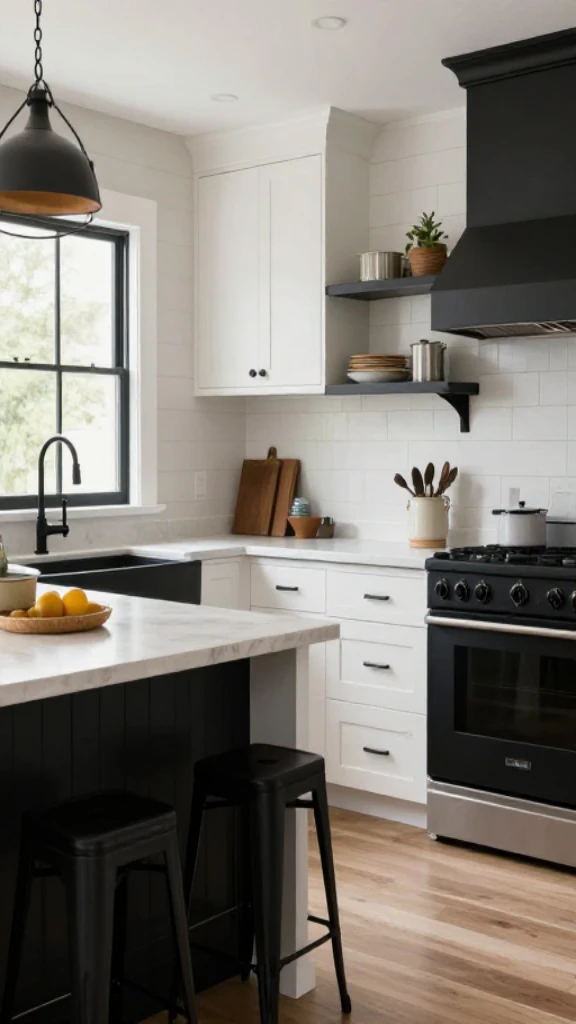
Farmhouse kitchens don’t have to be all soft neutrals and shiplap anymore. Adding black elements—like matte black cabinet hardware, a dark iron chandelier, or even black-framed windows—instantly modernizes that homey country vibe.
Picture pristine white shaker cabinets combined with a black farmhouse sink and black metal bar stools. The contrast feels new but solid. I attempted this strategy in a friend’s kitchen remodel, and the shift was astounding; instantly the area felt more sophisticated without sacrificing its warmth.
You can even use black open shelf brackets or a black range to tie everything together. This mix illustrates you don’t have to pick between rustic comfort and contemporary style—you can have both nicely.
2. Experiment with a Dark Statement Backsplash
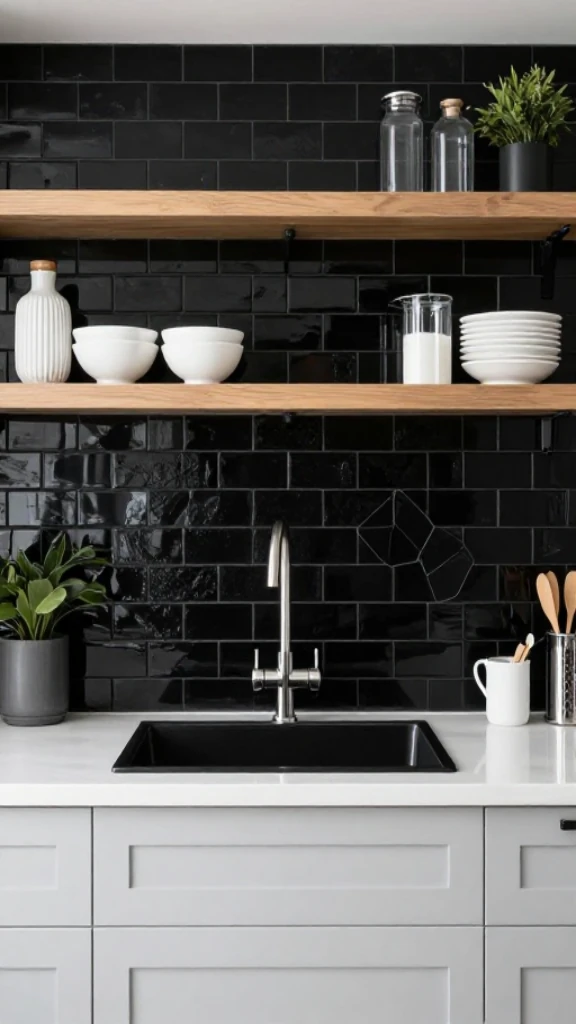
Who says backsplashes need to be neutral? A whole black backsplash wall generates instant drama and becomes the focal point of your entire kitchen. Whether you choose glossy black subway tiles, textured black stone, or even black hexagonal tiles, this daring approach pays off wonderfully.
It works especially well when coupled with white counters and lighter cabinetry, generating startling visual contrast. The black backdrop also helps your white dishes and glassware pop on open shelves.
Yes, you’ll need to wipe down spills more often, but the wow effect is totally worth the extra minute of cleaning. This design choice demonstrates confidence and gives a backdrop that pictures nicely for those Instagram-worthy kitchen moments.
3. Display Monochromatic Artwork
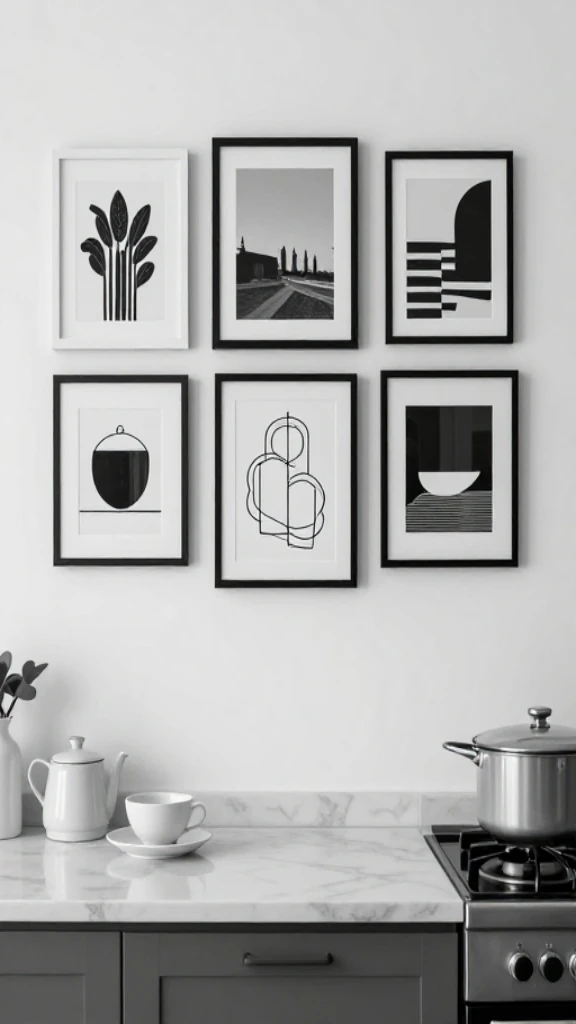
Art isn’t just for living rooms—your kitchen deserves some personality too. Hanging black and white photographs, graphic prints, or abstract pieces reinforces your color scheme while adding character.
Choose images that resonate with you personally, whether it’s antique food advertising, architectural photography, or minimalist line drawings. Frame them in basic black or white frames to keep everything harmonious.
I love how a gallery wall of black and white prints can transform a barren kitchen wall into something actually interesting. Position them strategically—maybe above a breakfast nook or on that odd wall space between cabinets. This tiny addition helps your kitchen feel more like a curated area rather than just a functioning room.
4. Reimagine Coastal Style in Darker Tones
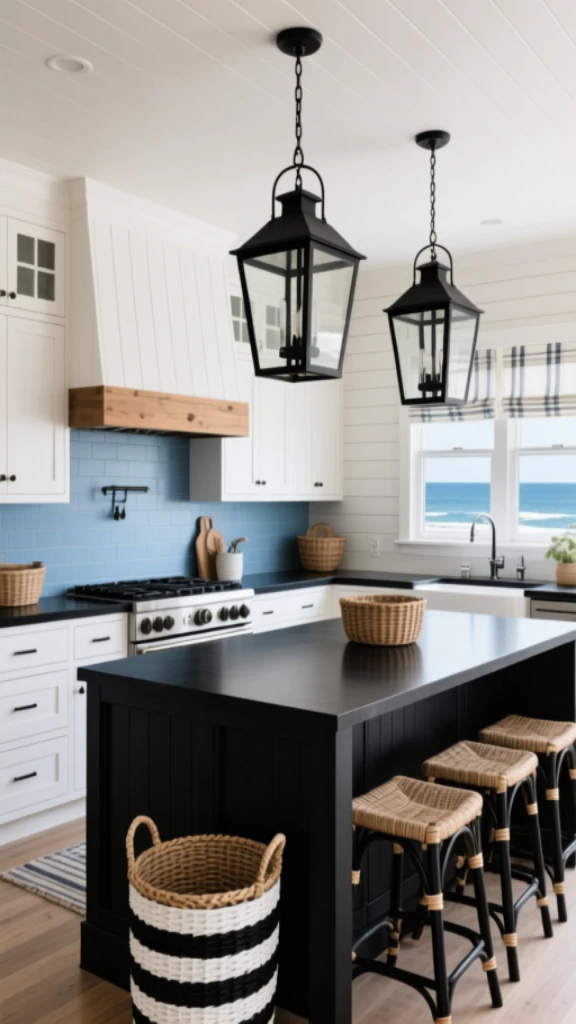
Coastal kitchens often veer toward breezy blues and sandy beiges, but a black and white coastal kitchen? Now that’s surprising and spectacular. Replace normal light wood with whitewashed or black-stained wood parts. Incorporate black metal lantern-style pendant lights instead of wicker fixtures.
Keep the breezy feeling with white beadboard or shiplap, but ground it with black worktops or a black kitchen island. Add texture through woven black and white baskets or striped linens. The outcome feels like a classy beach mansion rather than a traditional coastal cottage.
It’s proof that coastal style doesn’t have to follow a typical formula—it can be somber, elegant, and still capture those ocean emotions brilliantly.
5. Define Spaces with Black Trim
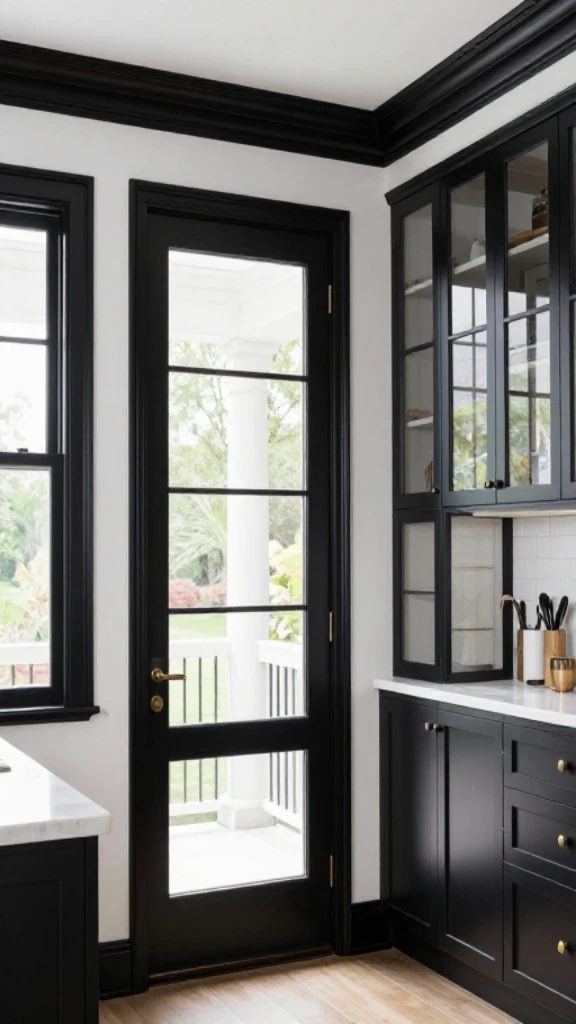
Sometimes the simplest elements produce the biggest impression. Black window frames, door frames, and crown molding create strong definition that makes white walls appear even brighter and cleaner. This architectural approach gives your kitchen a personalized, high-end look without substantial renovation costs.
The black outlines create visual structure and make your area feel more planned and designed. It’s particularly effective in kitchens with plenty of windows, as the black frames call emphasis to natural light and outdoor vistas.
I’ve noticed this trend gaining popularity because it’s quite affordable yet transforms the overall vibe of a place. Consider expanding this concept to glass cabinet doors with black frames for continuity throughout your kitchen design.
6. Incorporate Dark Stained Wood Elements
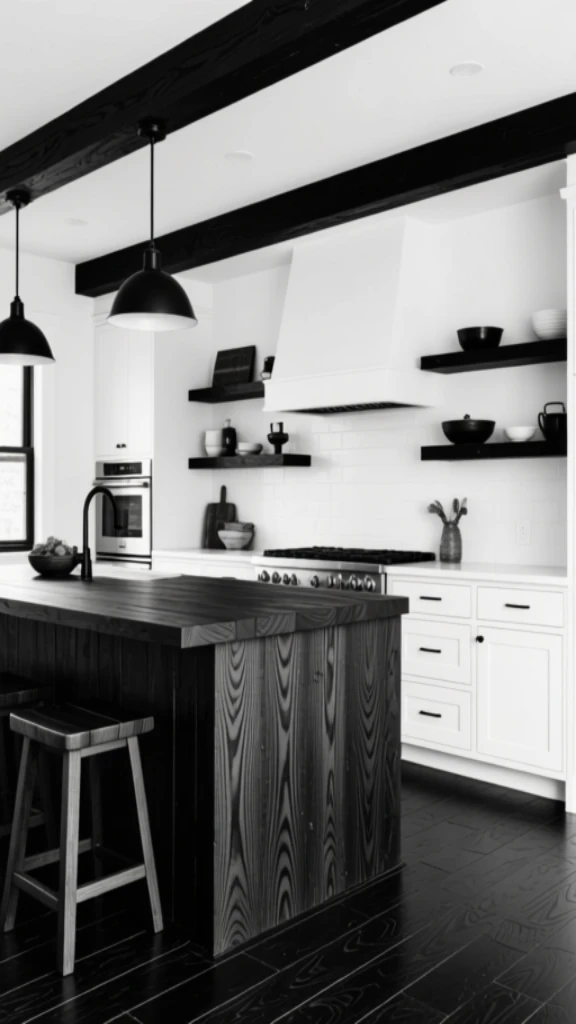
Not everything needs to be stark white or jet black—darkened wood tones give crucial warmth to avoid your monochrome kitchen from appearing chilly or sterile. Think black-stained hardwood floors, a dark butcher block island top, or floating shelves in ebony or walnut finish.
These deep wood tones lessen the contrast between stark black and white while preserving your color scheme. The natural grain patterns offer organic texture that makes the space feel more inviting and lived-in.
Wood also provides an aspect of nature indoors, which balances the possibly industrial impression of a black and white palette. This strategy works especially well if you’re worried about your kitchen feeling too harsh or unwelcoming—the wood organically warms things up.
7. Make a Statement with Dramatic Flooring
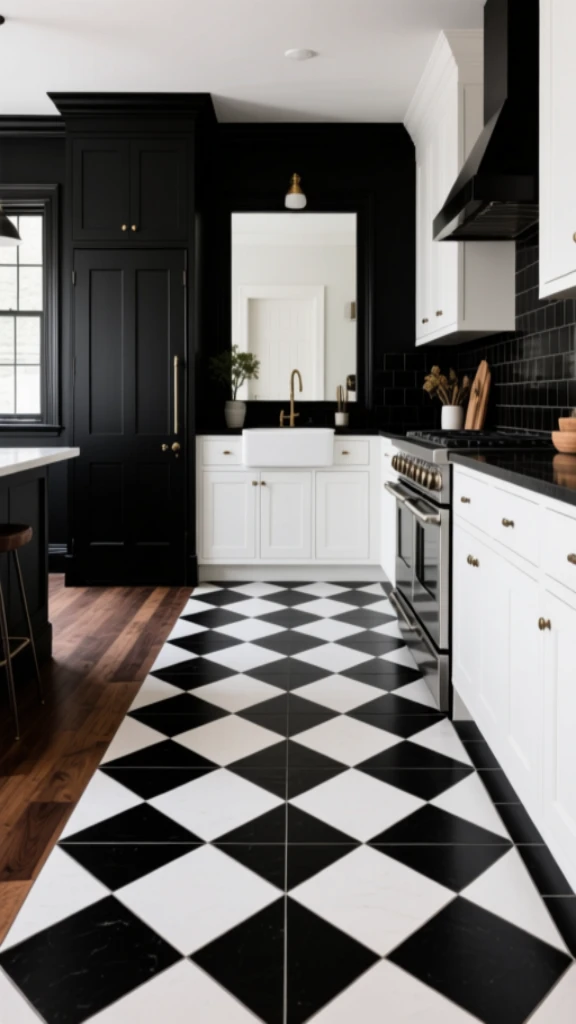
Your floors are a big visual aspect, so why not be bold? Black flooring—whether it’s large-format black tiles, polished concrete, or dark hardwood—creates a magnificent base that grounds your entire design. It’s unusual considering usually people default to lighter floors to “open up” the area.
But dark floors actually hide dirt better and offer wonderful contrast when coupled with white cabinetry. The impression is unquestionably rich and refined. If solid black is too harsh, consider black and white patterned tiles in geometric designs or basic checkerboard.
These patterns offer visual appeal at ground level and give your kitchen a vintage-meets-modern personality that’s completely delightful and full of character.
8. Blend Contrasting Stone Materials
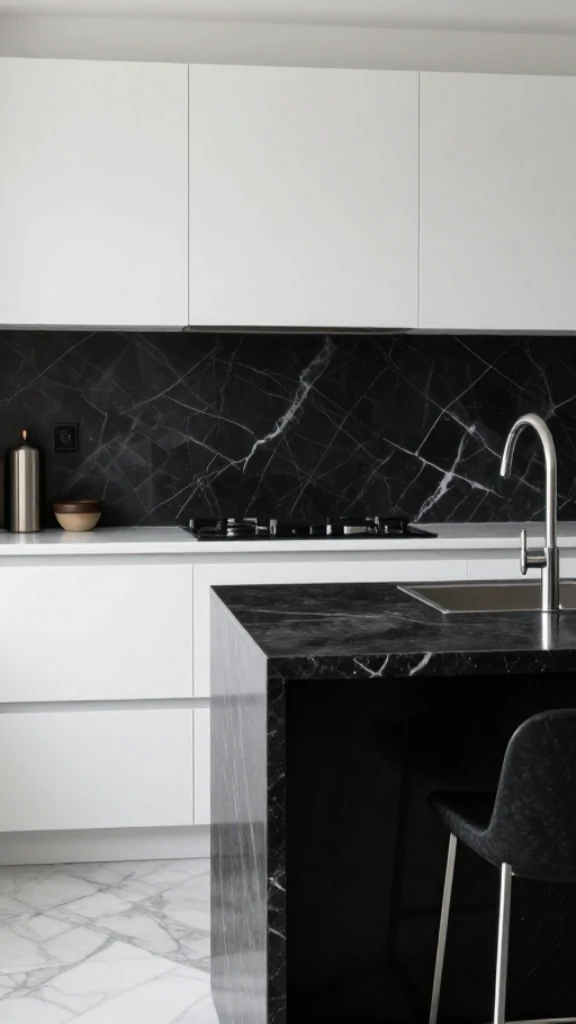
Mixing different stone materials in black and white gives depth and richness in your kitchen. Imagine white marble countertops with stunning gray veining coupled with a black granite or soapstone island. Or choose white quartz perimeter counters with a black marble backsplash.
The diverse textures and slight color variations inside genuine stone keep your kitchen from feeling bland or one-dimensional. Each stone catches light differently, creating visual complexity throughout the day.
I find that this method feels more collected and intriguing than utilizing simply one material everywhere. It displays care in design and generates natural focal points. Just ensure your stone choices compliment rather than compete with each other for a coherent, elevated effect.
9. Embrace Color-Blocking Techniques
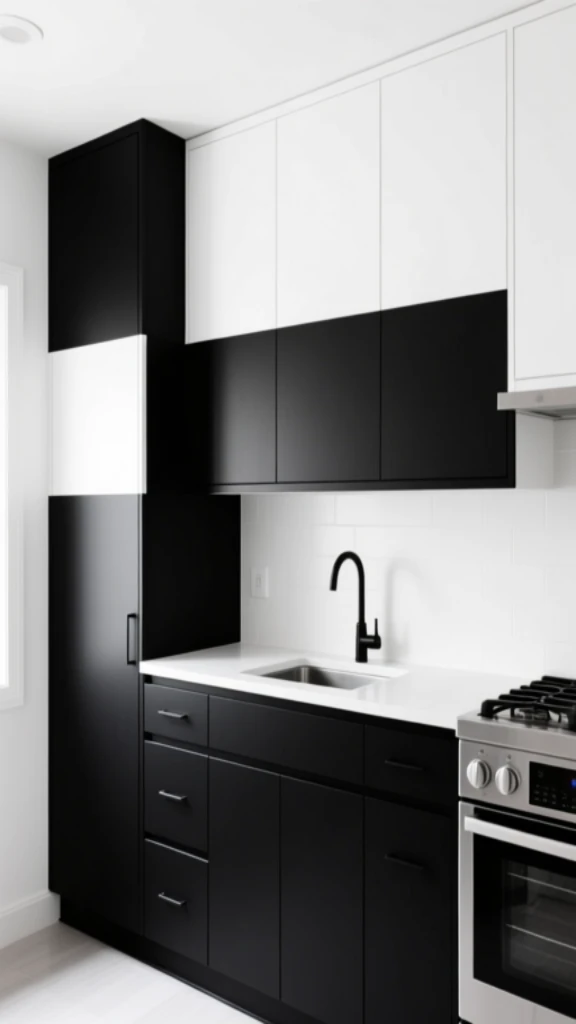
Color-blocking is utilizing solid blocks of black and white in distinct regions rather than mixing them evenly throughout. For example, paint your lower cabinets black and higher cabinets white, or dedicate one complete wall to black cabinetry while keeping the rest white.
This technique generates strong visual distinctions and makes your kitchen feel more dynamic and intentional. It’s bold without being chaotic because you’re still working within a regulated palette. The key is finding sensible dividing lines—horizontal divides frequently perform better than random patches of color.
This modern approach feels fresh and design-forward, demonstrating you’re not afraid to make significant aesthetic decisions. It also helps distinguish different functional zones within your kitchen naturally.
10. Transform Your Ventilation into a Feature
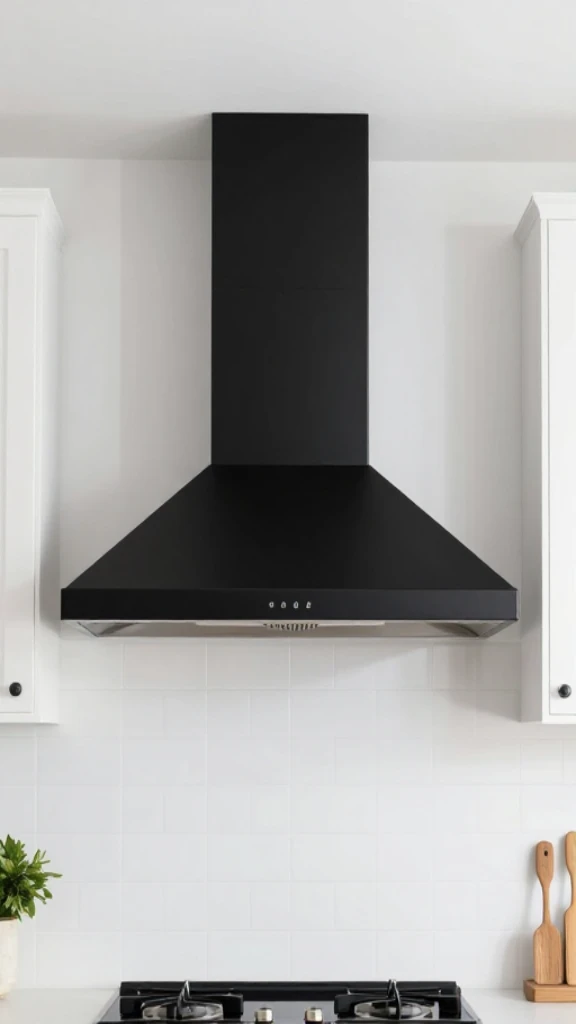
Range hoods are typically afterthoughts, but painting yours black or choosing a black metal design makes it a striking architectural element. A striking black range hood draws the eye upward and becomes a sculptural focal point in your kitchen.
Whether you want a sleek contemporary hood, a rustic farmhouse-style design, or an industrial metal variant, black makes it tough to miss. Pair it with a white tile or stone surround to accentuate the contrast.
This works particularly well in kitchens with high ceilings where you need something visually significant to fill the vertical area. I adore how this single tweak can dramatically modify the personality of your cooking area from ordinary to exceptional with minimal effort.
11. Blend in Weathered Elements
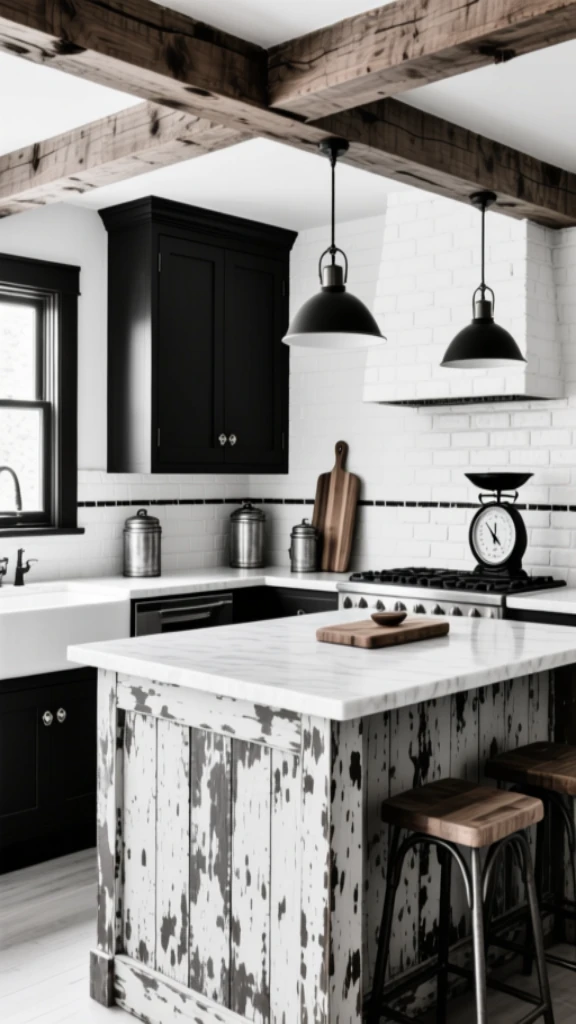
Rustic elements keep black and white kitchens from feeling too polished or sterile. Incorporate reclaimed wood beams, vintage metal hardware, or weathered finishes with your crisp monochrome scheme.
A aged wooden kitchen island base mixed with a white marble top creates lovely contrast between sophisticated and rustic. Exposed brick painted white with black mortar lines adds texture while retaining your color scheme. Even minor touches like a vintage black scale, antique metal canisters, or worn wooden chopping boards contribute to this balanced design.
These imperfect, aged items offer life and history to your room, making it feel acquired over time rather than designed all at once. It’s about embracing character alongside sleek design.
12. Install Dual-Tone Cabinet Colors
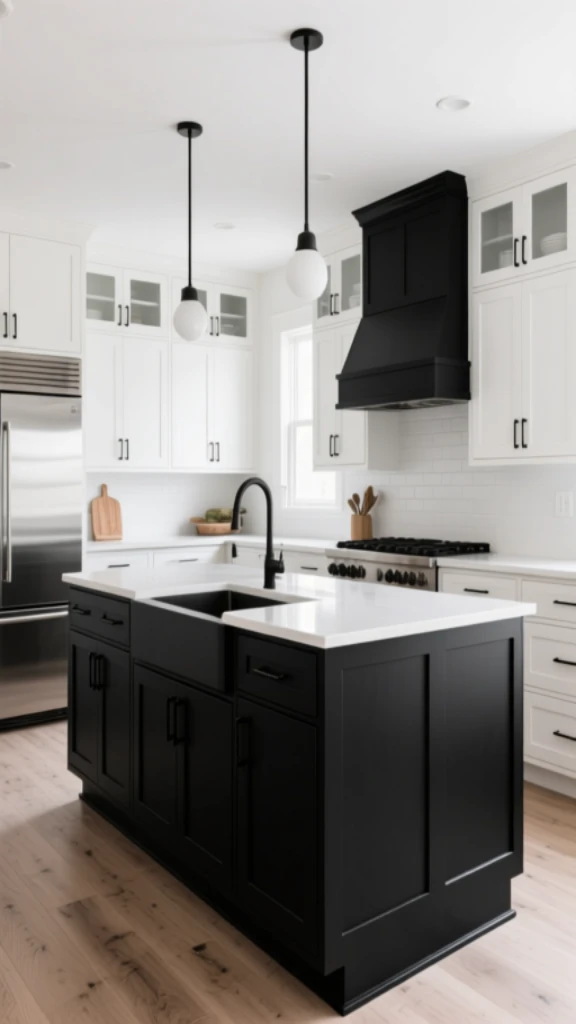
Two-tone cabinetry is one of the most popular kitchen trends, and black with white is the ultimate manifestation of this notion. Typically, designers position darker cabinets on the bottom and lighter on top to avoid a top-heavy feeling.
Black lower cabinets ground the area and hide wear easier, while white uppers keep things seeming open and light. You may also try a black kitchen island bordered by white perimeter cabinets for a more subtle touch. This method provides visual intrigue and dimension while maintaining cohesive.
The contrast naturally draws attention to your kitchen’s layout and architectural characteristics. It’s utilitarian too—different cabinet colors can help divide cooking zones from storage sections or prep rooms artistically and practically.
13. Introduce Deep Green Accents
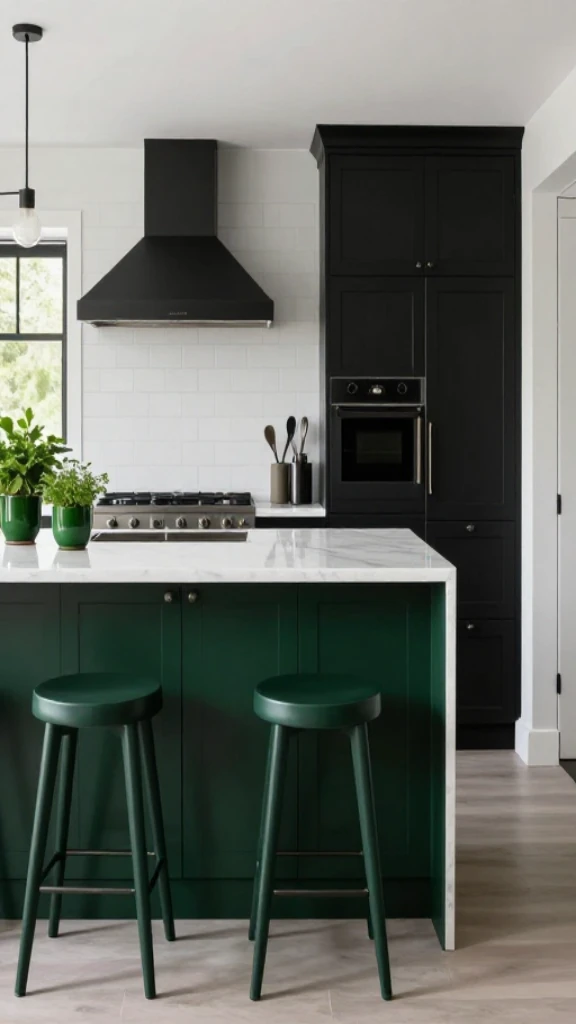
While this post concentrates on black and white, adding deep forest green or emerald tones offers unexpected richness without disrupting your monochrome base. Dark green reads almost neutral against black and white, adding just enough color to prevent monotony.
Consider dark green bar stools, potted herbs in green ceramic planters, or perhaps a single panel of deep green lower cupboards. The green brings vitality and nature indoors while keeping the classy, controlled hue. I’ve seen this combination work nicely in both modern and traditional kitchens—it seems new yet ageless.
The green also connects your internal environment with outdoor vistas through windows, creating visual harmony. Just use it sparingly so it accentuates rather than dominates your well balanced design.
14. Apply Black Sparingly for Subtle Sophistication
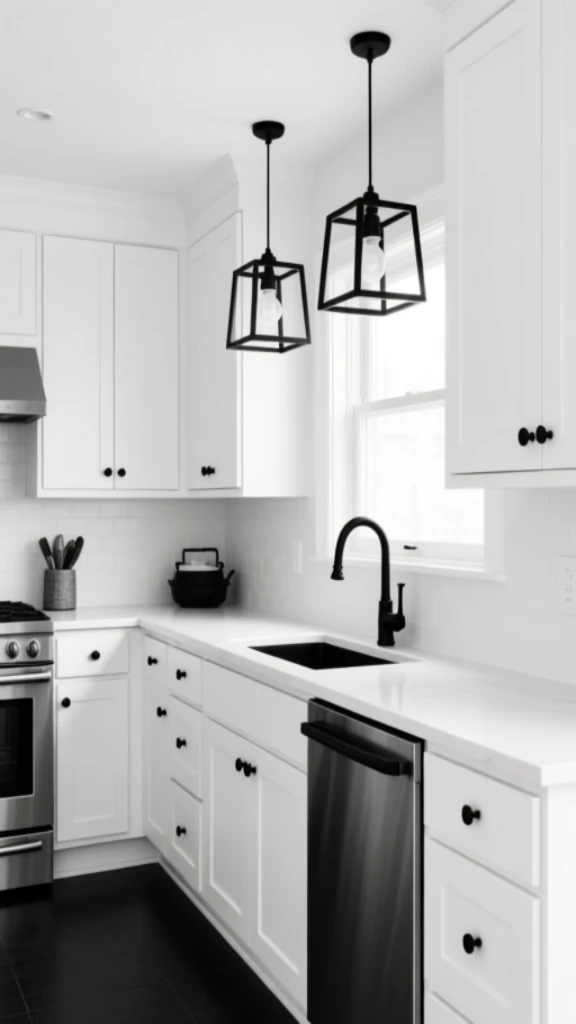
Not every black and white kitchen needs equal proportions of both colors. Sometimes a mostly white kitchen with judicious black accents gives the most attractive outcome. Think all-white cabinetry and walls with just black cabinet knobs, black faucets, and perhaps black-framed pendant lights.
These modest black elements create clarity and prevent an all-white kitchen from feeling washed out or clinical. The restraint demonstrates confidence in your design choices. This strategy works brilliantly in smaller kitchens where too much black could feel oppressive or cave-like.
The basic black functions like eyeliner for your kitchen—defining and complementing without dominating. It’s also easier to adjust later if you want to shift your aesthetic without extensive restoration.
15. Choose Matte Black Storage with Bright Work Surfaces
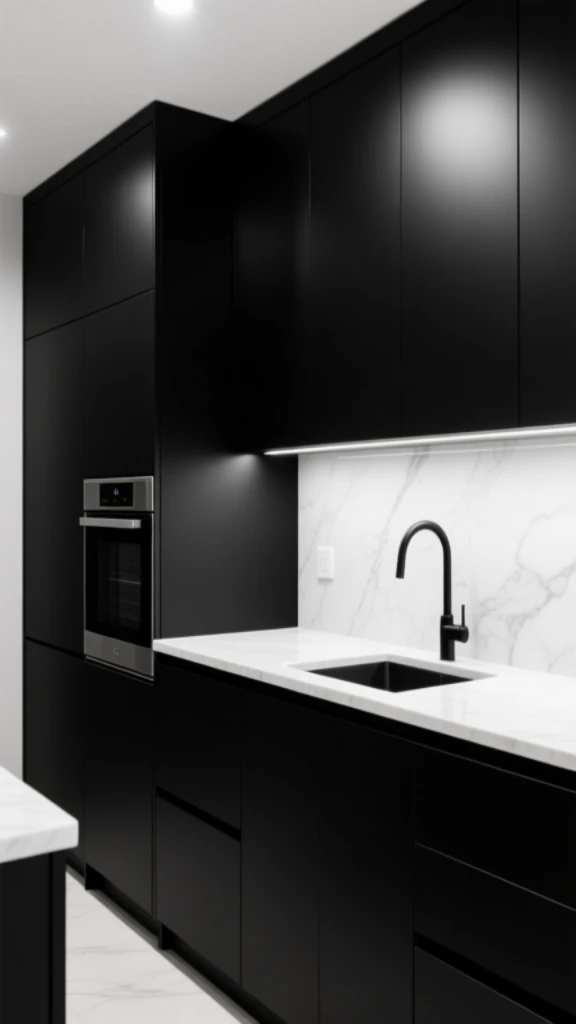
Matte black cabinets create a sleek, modern backdrop that seems less harsh than glossy black while hiding fingerprints better. Pair these soft-textured dark cabinetry with crisp white counters in quartz or marble for maximum contrast and usefulness.
The matte finish adds subtle elegance and feels more touchable and warm than shiny surfaces. White countertops give bright, clean work surfaces that make meal prep easier as you can see what you’re doing plainly. This combination works wonderfully in contemporary kitchens but can also suit transitional styles.
The contrast is striking enough to offer visual interest without competing textures battling for attention. I especially love how matte black cabinets don’t reflect harsh overhead lighting, giving a more relaxed, less clinical kitchen ambiance overall.
16. Use Classic Subway Tiles with Dark Grout Lines
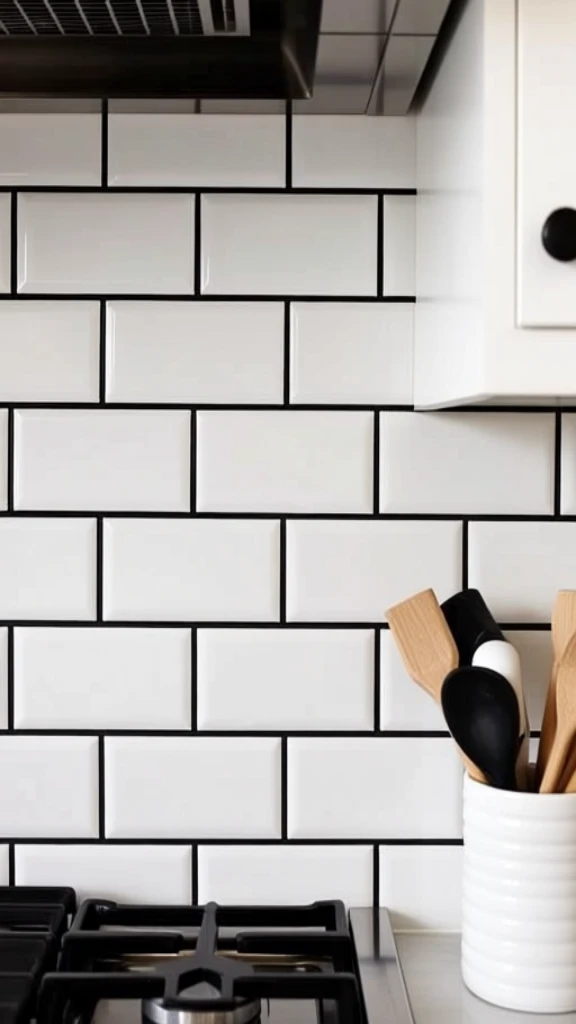
White subway tiles are kitchen classics, but applying black grout instead of white modifies them totally. The dark grout lines create a graphic grid pattern that adds visual appeal to what may otherwise be a simple white backsplash.
This method feels both historic and contemporary—channeling old-world charm with a modern touch. Black grout is also more forgiving with stains compared to white grout, making it useful for busy kitchens. The contrast highlights the tile pattern and creates texture on your walls without introducing new colors.
This is one of my favorite subtle ways to incorporate the black and white motif since it works in practically every kitchen style—from farmhouse to industrial to minimalist. Plus, it’s relatively inexpensive to achieve during a restoration or refresh.
17. Add Polished Black Details for Contemporary Elegance
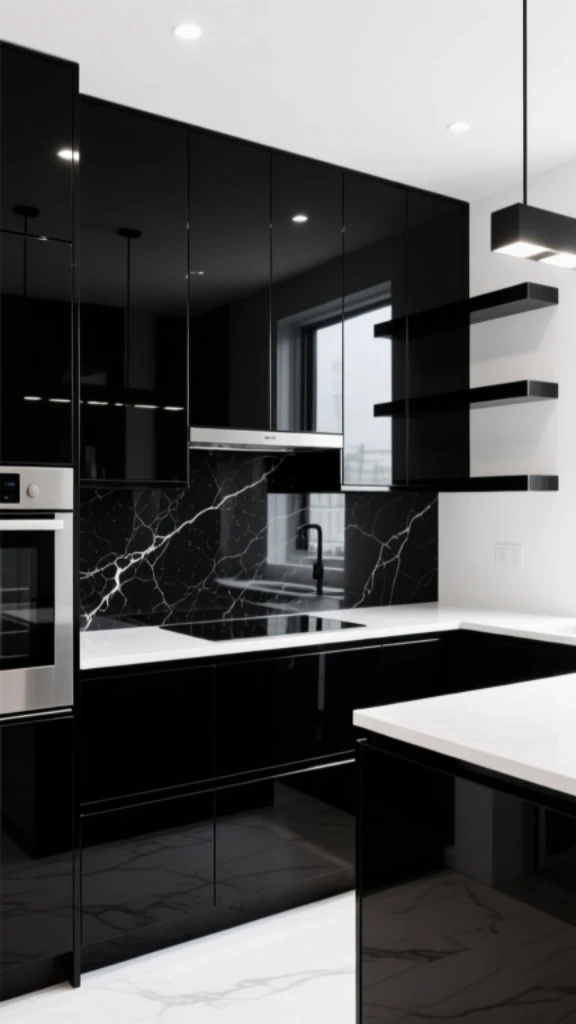
High-gloss black pieces provide a sleek, luxury appearance to your kitchen that is undeniably modern. Consider glossy black cabinet doors, a polished black marble backsplash, or lacquered black shelving.
These reflective surfaces catch and bounce light about your kitchen, keeping black from looking heavy or boring. The shiny finish also provides stunning reflections of your white items, boosting the sensation of space and brightness. Pair glossy black with matte white for interesting textural contrast, or go entirely glossy on both hues for maximum drama.
Just be mindful that shiny surfaces show fingerprints, smudges, and water spots more quickly, so they require more frequent cleaning. The trade-off is worth it for the elegant, almost jewelry-like aspect they provide to your room.
18. Install Transparent Black-Framed Cabinet Doors
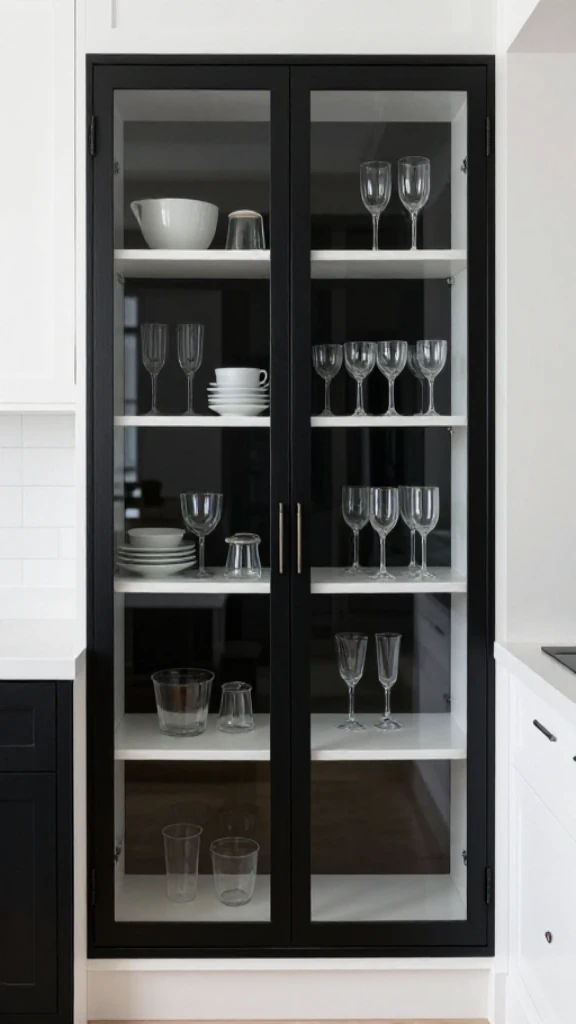
Glass-front cabinets with black frames create the perfect blend between exposed shelving and closed storage. They allow you to display magnificent dishware, glassware, or collections while the black frames give powerful architectural lines that anchor your décor.
The transparency avoids black from overpowering the area while yet incorporating that necessary dark contrast. You can paint the cabinet interiors white to make displayed goods pop, or go big with black interiors for maximum drama.
This design works especially well surrounding a range or sink area, creating symmetry and visual appeal. I find that glass-front cabinets push you to be more tidy and careful about what you display, which ultimately helps your kitchen look more curated and magazine-worthy.
19. Layer in Metal Accents for Urban Edge

Industrial-inspired metal features like stainless steel appliances, black iron hardware, exposed metal shelving brackets, and metal pendant lighting enhance your black and white theme while adding an urban, loft-like air.
The metallic finishes give another texture to your palette without introducing color, retaining your monochrome vision. Consider a stainless steel backsplash behind the range, black metal bar stools with white seats, or exposed metal shelving with white marble shelf tops. These industrial elements feel organically cool rather than trying too hard.
They also tend to be sturdy and practical for kitchen use. The combination of soft white surfaces with rough metal edges produces appealing contrast that appeals to modern sensibilities and makes your kitchen feel current and design-savvy.

- ✅ Premium Quality & Durability – Crafted from high-quality materials with expert manufacturing, ensuring long-lasting performance and reliability for years to come. Adjustable ring positioning allows you to create various shapes and angles for personalized lighting effects
- ✨ Modern & Elegant Design – Features a sleek double 3-ring structure with a Elegant Black finish, adding a touch of contemporary sophistication to any home or commercial space. The Top Ring Diameter is 60 cm The Middle Ring Diameter Is 40 CM And The Lowest Ring Diameter Is 20 Cm
- 💡 Warm White Illumination (3000K) – Emits a soft and inviting glow, creating a cozy ambiance perfect for dining rooms, bedrooms, living rooms, restaurants, and other stylish interiors.
- ⚡ Energy-Efficient LED Technology – Equipped with integrated LED lights that provide bright, uniform illumination while consuming less power, reducing electricity costs and maintenance efforts.Integrated LED lights offer brilliant illumination while being energy-efficient and long-lasting.
- 🏡 Versatile Placement for Multiple Settings – Designed to enhance various interiors, making it an ideal lighting choice for homes, offices, coffee shops, bars, hotels, and modern workspaces.
![MUHAZ Handwoven Natural Paper Rope diamond Hanging Light Fixture, Pack of 1 Coastal Farmhouse Ceiling Lamp, Warm Ambient Lighting for Kitchen, Dining Room, Bedroom, Living,Pendant, [BULB NOT INCLUDED]](https://m.media-amazon.com/images/I/41U0c+g7hRL._SL160_.jpg "19+ Elegant Black and White Kitchen Ideas to Transform Your Space")
- Handwoven Natural Rope Design Each pendant is crafted from natural paper rope fibers, giving it a one-of-a-kind boho aesthetic with beautiful texture and artisanal charm.
- Warm & Inviting Ambient Light The open-weave shade casts a soft, warm glow, perfect for creating a relaxing atmosphere in any room.
- Versatile Home Décor Style Ideal for bohemian, coastal, farmhouse, Scandinavian, or modern natural interiors—works anywhere from kitchens to bedrooms.
- Durable & Lightweight Construction Sturdy rope and metal framing ensure long-lasting performance while remaining lightweight for easy hanging.
- Easy Installation & E27 Base Compatible with standard E26 bulbs (LED, incandescent, or Edison). Simple hardwired installation suitable for most ceiling setups.

- Modern Design: Wipro Garnet Batten comes with slim and sleek design which adds aesthetic value to your space.
- Energy Saving with LED: Wipro Garnet LED Batten are more efficient than conventional light, thus saving more energy and reducing your electricity bills.
- Long Life: Wipro Garnet Batten comes with high quality LM 80 Tested LED that ensures long life.
- Eye Comfort: Wipro Garnet Batten comes with high quality diffuser for better visual comfort and even distribution of light.
- Wattage : 5W Colour : Warm White (2700K) Number of Units : 1 Length : 1 Ft
![MUHAZ Handwoven Natural Paper Rope Hanging Light Fixture, Coastal Farmhouse Ceiling Lamp, Warm Ambient Lighting for Kitchen Island, Dining Room, Bedroom,Pendant,Pack of 2 [Bulb NOT Included]](https://m.media-amazon.com/images/I/41JC2MGhFkL._SL160_.jpg "19+ Elegant Black and White Kitchen Ideas to Transform Your Space")
- Handwoven Natural Rope Design Each pendant is crafted from natural paper rope fibers, giving it a one-of-a-kind boho aesthetic with beautiful texture and artisanal charm.
- Warm & Inviting Ambient Light The open-weave shade casts a soft, warm glow, perfect for creating a relaxing atmosphere in any room.
- Versatile Home Décor Style Ideal for bohemian, coastal, farmhouse, Scandinavian, or modern natural interiors—works anywhere from kitchens to bedrooms.
- Durable & Lightweight Construction Sturdy rope and metal framing ensure long-lasting performance while remaining lightweight for easy hanging.
- Easy Installation & E27 Base Compatible with standard E26 bulbs (LED, incandescent, or Edison). Simple hardwired installation suitable for most ceiling setups.

- The harmonious combination of metallic glossy Yellow top and white inside makes this Industrial Pendant Light a classy decor, adding a rustic touch to your home.
- Pendant Light comes with everything you need to install (canopy, a black cord with metal base cap.) Around 15 minutes is enough to get the job done.
- This hanging pendant fixture comes fitted with an imported E-27 bulb holder and features a 40 inch fully adjustable cord, allowing you to customize the fixture to your lighting needs and desired look.
- DECORATION: Best suited for dining table, kitchen, balcony, bar table, gifts, Cologe, bar, Office.
- DIMENSION: Weight – 700 gram, Dimension – 26x26x17 cm., Colour-yellow
- Handwoven Natural Rope Design Each pendant is crafted from natural paper rope fibers, giving it a one-of-a-kind boho aesthetic with beautiful texture and artisanal charm.
- Warm & Inviting Ambient Light The open-weave shade casts a soft, warm glow, perfect for creating a relaxing atmosphere in any room.
- Versatile Home Décor Style Ideal for bohemian, coastal, farmhouse, Scandinavian, or modern natural interiors—works anywhere from kitchens to bedrooms.
- Durable & Lightweight Construction Sturdy rope and metal framing ensure long-lasting performance while remaining lightweight for easy hanging.
- Easy Installation & E27 Base Compatible with standard E26 bulbs (LED, incandescent, or Edison). Simple hardwired installation suitable for most ceiling setups.

- Modern design: layered design, more stereoscopic. The elegant ceiling light impresses with its unusual and contemporary fashionable look and is a real eye-catcher in the home and office.
- High Performance:Low power but high brightness, equipped with high efficiency LED chips, it can help you save about 85% electricity bills. With a lifespan of 50,000 hours, the ceiling light virtually eliminates the need to replace the bulb and its long lasting light brings you continuous light for a long time.
- Natural White Light & Eye-Friendly – Brings you natural lighting, it can protect eyes from aggressive and dazzling lights, creating a warm and peaceful atmosphere for your home or office.
- EASY ASSEMBLY – Easy to install and disassemble, just take little time to install with hardware accessories and ceiling light included. The ceiling light is suitable for a variety of home styles and places: hallway, kitchen, balcony, bedroom, living room, etc.
- [Warranty & After-sales] 1 year warranty. We provide you with high quality product and best customer service. If you have any questions or feedback, please feel free to contact us, prompt reply and friendly customer service will be there for you
- Natural Elegance: Crafted from premium pine wood, the Artica ceiling lamp showcases the natural beauty of woodgrain, adding an element of rustic elegance to your space.
- Warm White LED Glow: Enjoy a cozy and inviting atmosphere with the warm white LED light, providing a soft and comforting glow for relaxation or social gatherings.
- Durable Construction: Built to last, the lampshade’s pine wood construction ensures durability and longevity, making it a timeless addition to your home décor.
- Versatile Style: The lamp’s timeless design seamlessly blends with various interior styles, offering versatility for any room – from modern to farmhouse aesthetics.
- Adjustable Hanging Height: Customize the lamp’s height to suit your space and preferences, allowing for flexibility in creating the perfect lighting arrangement for any room.
![MUHAZ Handwoven Natural Paper Rope Dome Hanging Light Fixture, Pack of 2 Coastal Farmhouse Ceiling Lamp, Warm Ambient Lighting for Kitchen, Dining Room, Bedroom, Living,Pendant, [Bulb NOT Included]](https://m.media-amazon.com/images/I/41kKJRht+BL._SL160_.jpg "19+ Elegant Black and White Kitchen Ideas to Transform Your Space")
- Handwoven Natural Rope Design Each pendant is crafted from natural paper rope fibers, giving it a one-of-a-kind boho aesthetic with beautiful texture and artisanal charm.
- Warm & Inviting Ambient Light The open-weave shade casts a soft, warm glow, perfect for creating a relaxing atmosphere in any room.
- Versatile Home Décor Style Ideal for bohemian, coastal, farmhouse, Scandinavian, or modern natural interiors—works anywhere from kitchens to bedrooms.
- Durable & Lightweight Construction Sturdy rope and metal framing ensure long-lasting performance while remaining lightweight for easy hanging.
- Easy Installation & E27 Base Compatible with standard E26 bulbs (LED, incandescent, or Edison). Simple hardwired installation suitable for most ceiling setups.

- PERFECT INDUSTRIAL STYLE LIGHT: The harmonious combination of metallic white top and glossy white convex inside makes this Industrial Pendant Light a classy decor, adding a rustic touch to your home.
- A CONVENIENT INSTALLATION PACK: Pendant Light comes with everything you need to install (canopy, a black cord with metal base cap.) Around 15 minutes is enough to get the job done!
- SPECIFICATION: This hanging pendant fixture comes fitted with an imported E-27 bulb holder and features a 40 inch fully adjustable cord, allowing you to customize the fixture to your lighting needs and desired look and a canopy for the ceiling
- DIMENSION: Weight – 690 gram, Dimension – 25x25x12.5 cm. DECORATION: Best suited for dining table, kitchen, balcony, bar table, gifts
- Made in India and Exclusively Hand-crafted: All our products are designed and manufactured by our skilled artisans using indigenous techniques in India, sustainably and with locally procured material.
FAQs
How can you create a nice atmosphere in a monotone kitchen?
Layer in natural textures like wood cutting boards, woven baskets, linen towels, and plants. Warm lighting makes a major difference too—choose bulbs with warm color temperatures rather than cool white. Add personal touches like cookbooks and ceramics to soften the atmosphere and prevent it from feeling like a display.
Does a monotone kitchen require regular cleaning?
Black surfaces show fingerprints and smudges more than white, while white reveals stains more easily than dark colors. However, choosing matte finishes over glossy helps minimize noticeable marks. With regular fast wipe-downs, maintenance is manageable. Quality materials also withstand stains and wear better over time.
What’s the normal budget for creating this kitchen style?
Costs vary greatly based on whether you’re performing a full makeover or just freshening. Painting existing cabinets black and upgrading hardware might cost a few hundred dollars, while a total overhaul with new cabinets, worktops, and appliances could price $15,000-$50,000 or more depending on your choices and kitchen size.
Which hue should dominate—black or white?
Most designers prefer more white than black, especially in smaller kitchens, to preserve brightness and avoid the room from seeming closed in. A common ratio is 60-70% white to 30-40% black. Larger kitchens with adequate natural light may take more black without becoming oppressive or dismal.
Can this color scheme work in small kitchens?
Absolutely! Focus on white as your dominant color with black applied judiciously as accents—think black hardware, a black faucet, or black-framed windows. Keep upper cabinets white or use open shelving to preserve an airy feeling. The contrast actually helps define the space and prevents it from melting together visually.
Final Thoughts
Creating a black and white kitchen is about achieving the exact mix between drama and livability. You’re constructing a setting that’s both striking and cozy, elegant yet friendly. Don’t be afraid to experiment with different ratios of black to white until you discover what feels suitable for your home and lifestyle.
Remember, this timeless mix allows you amazing flexibility—you can always modify accents and accessories to update the appearance without starting over. Start with one or two ideas that actually excite you, then build from there.
Your kitchen should represent your personality while servicing your daily needs beautifully. Trust your instincts, and you’ll build a space you’ll love walking into every single day for years to come.